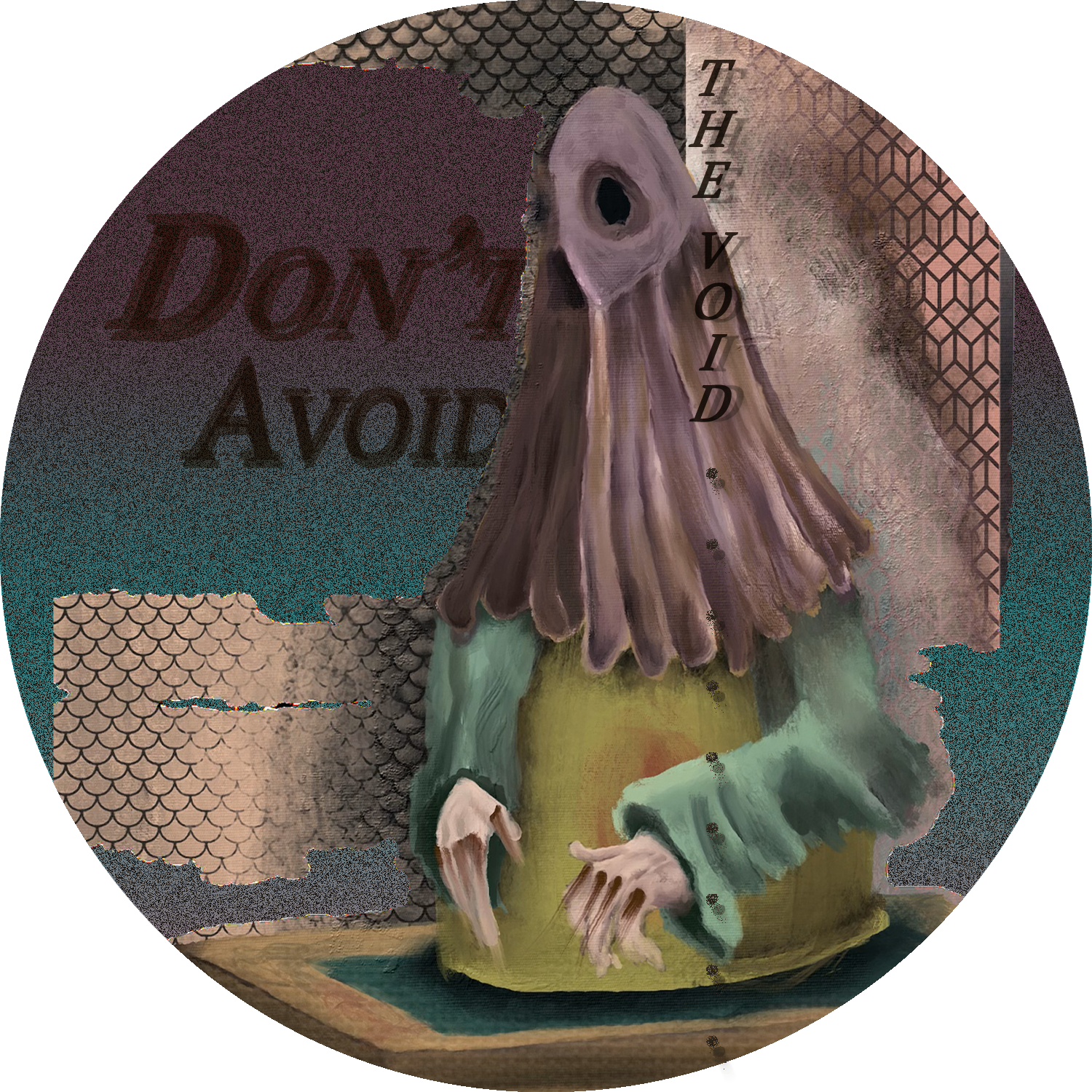
The snacks did not work. The Void and the people are just as vacant as they were before. Scared and tremulous, they will only scream into it.
Convinced they aren’t heard, that they aren’t seen, they are ashamed to be in The Void. They’re convinced that such screaming represents dysregulation.
But The Void Keeper sees them and loves them. He wants to embrace them, tell them it’s okay. That The Void is there for a reason — not just for screaming. But still there for screaming.
Screaming and dancing and suffering and delighting are all just a part of living. That The Void and all the encounter inside of it aren’t just natural, but essential.
Shame is infectious.
Even The Keeper can feel its waxy presence all over his body.
The snacks aren’t a good lure. None of them have been eaten.
They’re all accounted for.
Maybe save for one or two he snagged when no one was looking. The Keeper wanted to try out snacks.
He sees the allure of such a lure that’s a snack.
So why didn’t they work?
He had a little booth and everything. With fancy little glowing lights and a banner to attract the crowd. He’d been worried that they would come in such droves there wouldn’t be snack enough for them all.
And now he has too many snacks.
He cannot stand it.
It breaks his hearts.
No one even seems to realize he has a heart fragile enough to break.
And so he hatches a new scheme.
He records further schemes for future unleashing.
The Keeper is as relentless as he is kind;
The Keeper will keep trying —
not just his name is his duty, but because he longs to dance with the people in The Void.
But there is no dance because there is no music.
They have many things in The Void; but they don’t have music.
People need to bring their music with them;
and now all they bring is their agony and their shame
He knows enough it won’t ever be like it used to be.
but he also knows enough to know that it doesn’t need to be like this.
People have lost this essential aspect of themselves, of their humanity.
They have forgotten,
So he will remind them.
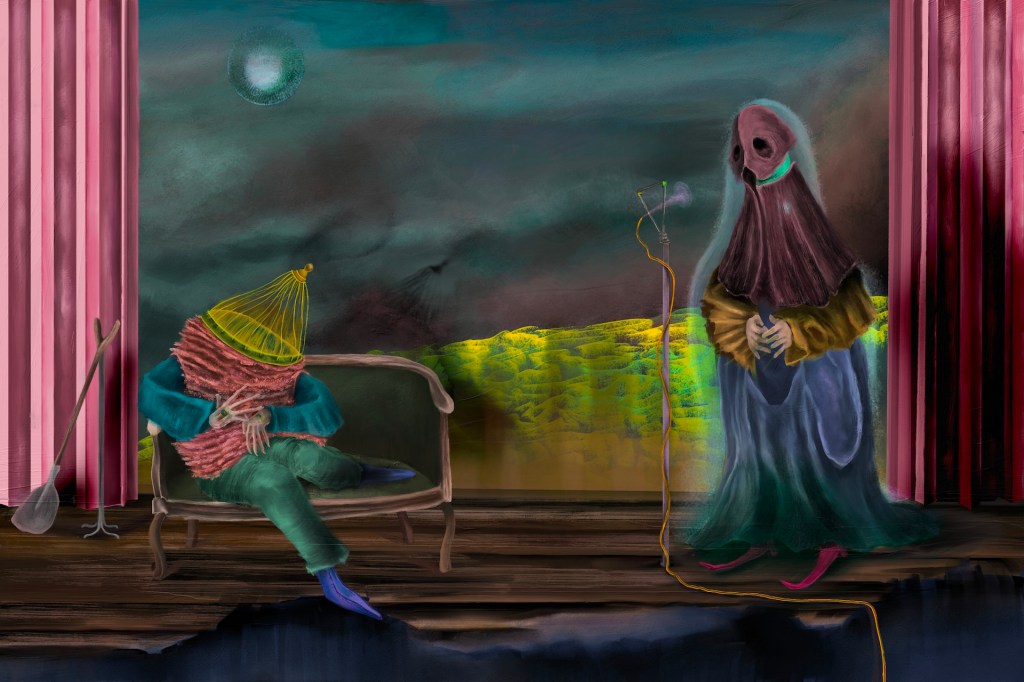
So The Keeper fashions himself a stage, he drapes himself a curtain, he fashions himself an advocate, and he forges himself a microphone
He shall inform them, entertain them, sell them The Void.
He’s seen just such a tactic before;
it is a common human endeavor to trap each other in a room full of snacks and keep them there while someone presents to them until they buy it.
The humans love to sell, love to buy. They love it so much — the production and the consumption — that they tie their personal worth and their place in the social hierarchy to this exchange.
They sell salvation to each other — and they eat their god. They sell instructions to each other on how to buy and sell better, and sometimes they even sell each other property they don’t own and can only visit occasionally.
The Keeper is not selling. Not really. The Void cannot be owned, cannot be sold. It does not discriminate.
But The Keeper thinks that if he makes it look like he’s selling something that maybe the humans will embrace it.
He will show them The Void, he will answer the questions The Interviewer has already prepared.
They will make a great team. He and The Interviewer, cobbled together but more than adequate. The Keeper even wears his best, most fanciest shoes.
He heard once that you can tell a lot about someone by their shoes. And even though he’s not really a someone, he wants people to tell good things about his shoes.
He will not share his pain, his frustration, or his consternation over the changes to the people and their relationships to themselves, The Void, their shadows and shades.
He does not want to appear desperate. More importantly, he does not want to shame them into going. Shame is powerful, but it is corrupt. Humanity is already drunk enough on shame.
He will portray The Void as not just a good place, but a novel place too. A place no one has ever been to — this is the grand opening, don’t miss out!
Which is a lie that brings him discomfort. The Void is older than The Keeper and The Keeper has been here the whole time.
But it seems like a necessary lie,
a deception with the best of intentions.
He’s never sold anything before,
he’s not even sure what the selling of a thing entails:
an exchange?
a transaction?
They’ll want to give him something for his trouble lest they think it’s a scam.
Antithetical to all he knows — but it seems important to people, so it will be important to him.
The Keeper will sell them The Void if he has to.

