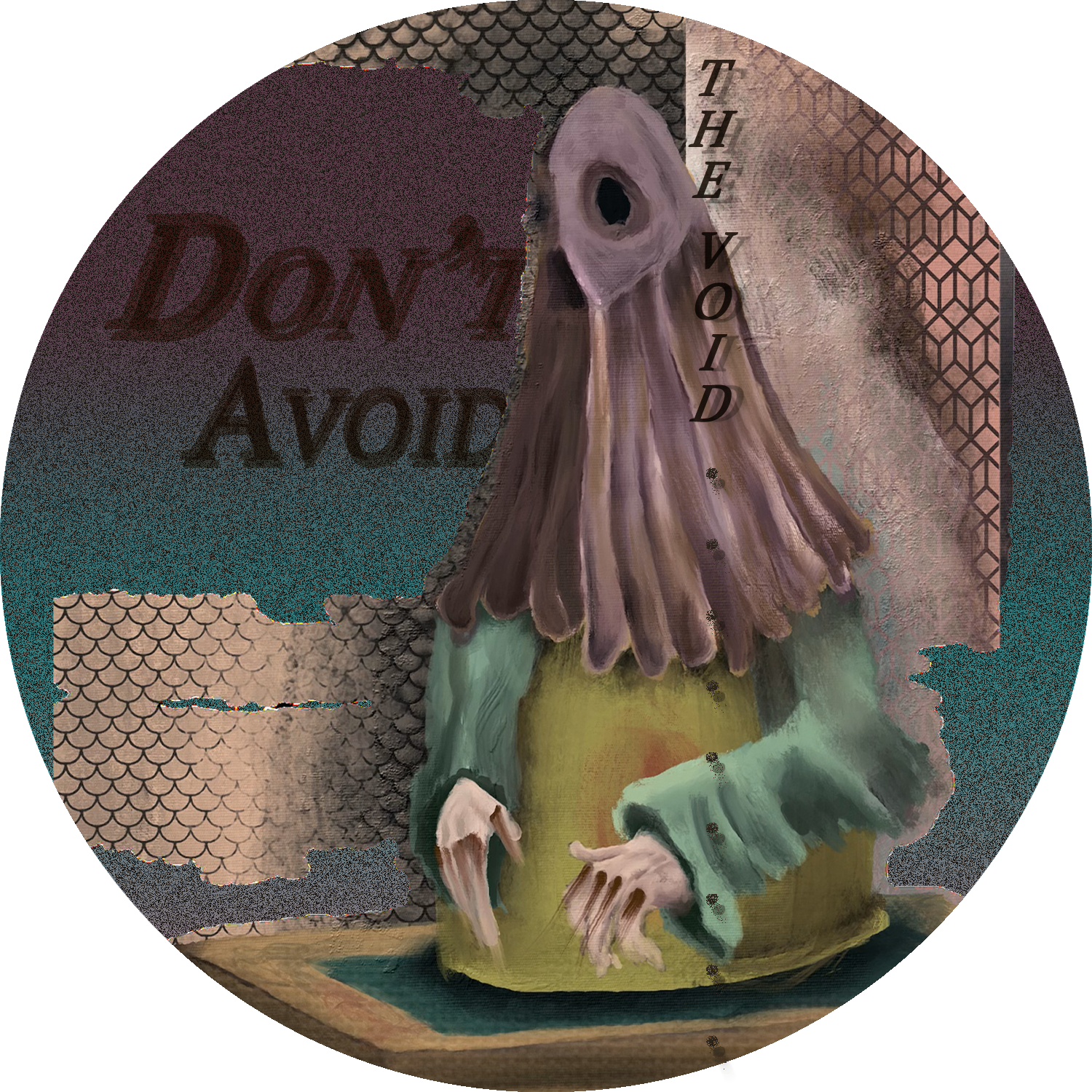
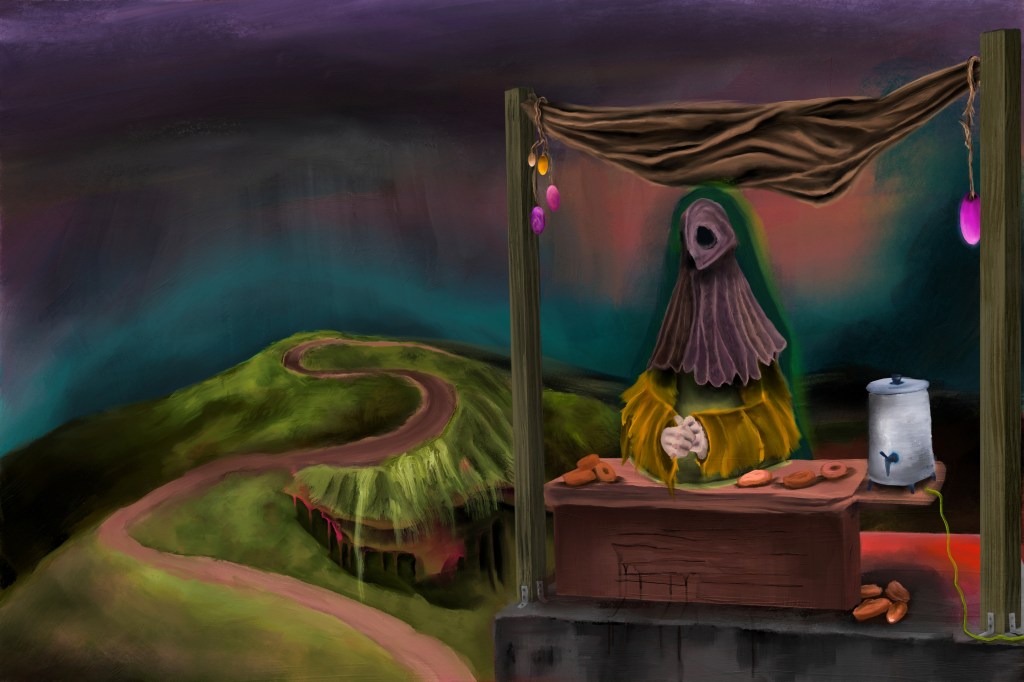
The Keeper has watched us longer than any human can recall.
He was there to listen to the first stories.
He was there for humanity’s first, toddling, steps into the unknown.
Always silent, but encouraging. People would find their way to him, to The Void in a myriad of different ways. Sometimes in desperation, sometimes through intuition, sometimes with the help of plants with the specific intent of encountering Him and The Void.
Guided or alone, he caught them in their descent, guided them, kept them safe. He helped them to see what they needed to see and brought them home to ponder upon and grow from the experience. And they grew and they flourished from their encounter with the depths of their selves.
This newest batch of humanity is something else though. Stubborn, obstinate — unruly in all the wrong ways. He doesn’t judge them, it is not in his nature. But he is terrified for them.
They are in such a hurry to obey. Humans have always used hierarchies to organize themselves, to maintain order, to survive. And they’d always been eager to burn a hierarchy to the ground when it became too top heavy. Topple it so it shatters and start again. It was part of the cycle. Violent but necessary. A culling to encourage growth. A forest fire to re-nourish the soil.
Lately, however, humanity is so quick to fall in line, so quick to bend over backwards and destroy themselves in service of a power which wields too much, hordes too much, which kills them mind, body, and spirit.
If humanity was previously defined by their wit, their grit, and their whimsy — these new ones are defined by their fear. They must produce, they must consume. If they do not, they have no place in a society that should have been burned to the ground long ago. They fear not being a part of this society. A fear so all-consuming they have built a whole industry of drugs to avoid the void. The drugs poison them in the name of better serving their masters.
The Keeper knows this needs to change — but he cannot interfere directly. He is a guide, a companion, an escort. Above all, he is an observer. He sees them. And because he does not judge them their folly, he sees more than he otherwise might.
And in his observations he has noticed that the humans spend a great deal of time and energy, a majority of their time and energy going to meetings that no one wants to go to, during which absolutely nothing of importance is discussed or decided upon. Even the more radical among them have meetings where the radical-ness of their composure is expressed by an insistence on absolute consensus. If one of them disagrees — they just extend the length of the meeting until everyone does. It looks like torture. Like self-flagellation. Penance for crimes and sins The Keeper cannot comprehend.
And instead of changing the meetings that everyone hates, that no one wants to go to, that most do not see the value in; they trick themselves into going by offering themselves food. Which is strange — food is more abundant than ever. Food has always been an important, communal, ritual for them. And they choose to break bread with people they do not like, in a place they do not want to be in, for a reason even they cannot comprehend.
What a waste. But who is he to argue with a technique that seems to work. His place is not to judge or question. He is here to guide, to encourage, to be curious. The Void is not without its own techniques for summoning people to its depths. But those tricks seem powerless in the face of the medicine they take, the values they do not question, their dismal obsession with limitless production and consumption.
And so, The Keeper assembles his snacks. And he waits at the entrance to The Void with them and a large vat of the bitter liquid they use to coax themselves to go out to places they hate.
He can feel the fear dripping off of them. Their anger, their frustration — how disconnected they are from one another despite the endless inventions they’ve devised for themselves so they never have to be alone. As they lose their connection with themselves, they loose their connection with each other. They isolate in droves — densely packed and all alone.
The Keeper can taste their desperation, their despondence. And so he worries. He is afraid too.
But there is hope. There have been crises before and there will be crises again. Crises are necessary — they have to happen. Crisis is the nature of existence. Nature is not static, reality is relative because it is relational. All things are connected to themselves, to each other, to everything that cannot be seen; the churning underbelly of the unconscious. But the exact nature is too complicated for The Keeper to know anything about it. Nature just is. All he knows is the fabric, and the fabric is getting fussy; ill-fitting and scratchy.
He has hope and he has faith — in himself and in humanity. They will return to The Void, whether they want to or not, and he will be there to catch them, to guide them, to keep them safe.
 The Void Keeper